
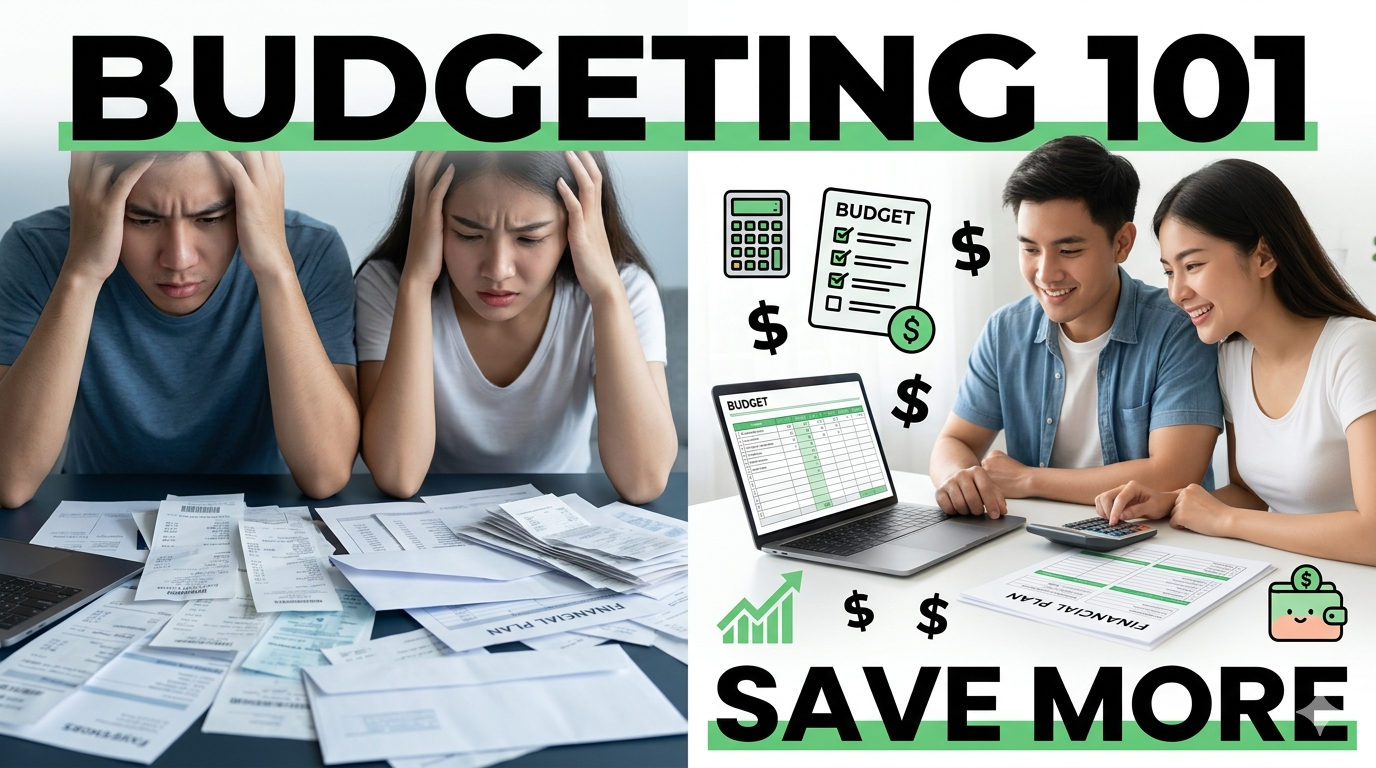
Most budgets die on day eleven. Not because the person who made them was bad with money — but because the budget was built for a perfect month that never actually shows up. Here’s what changes that.
A solid set of personal budgeting tips isn’t about restriction. It’s about building a system your real income can run on — one that doesn’t shatter the moment your car needs new tyres or your energy bill spikes in January. This guide covers how to create a financial plan from scratch, which monthly budget planner method actually fits your situation, and how to keep it working past month one. This is not financial advice — it’s a practical framework you can adapt to your own numbers.
⚡ Quick Answer
Personal budgeting tips and how to create a financial plan — a monthly budget planner is a structured system for allocating your income across fixed costs, variable spending, savings, and debt repayment. It works best when it accounts for irregular expenses, not just monthly ones.
- Track every dollar for 30 days before writing a single budget line
- Choose a method that fits your income type (salaried vs. variable)
- Build an “irregular expenses” category — it’s the #1 thing most plans skip
- Automate your savings transfer on payday, not at month-end
- Review every 30 days — your budget is a living document, not a rulebook
Why Most Budget Plans Fail Before the Month Is Over
Creating a financial plan sounds straightforward — income minus expenses equals what’s left. But that equation breaks down fast when you forget about the car registration due in March, the birthday dinner you didn’t plan for, or the streaming service that auto-renewed. According to a 2024 Bankrate survey, 57% of Americans said unexpected expenses were the primary reason they couldn’t stick to a budget. The problem isn’t willpower. The problem is that most budget templates are built around predictable months, and almost no month is actually predictable.
Here’s the thing: a budget that only works when nothing goes wrong isn’t a budget — it’s a wish list. The fix isn’t stricter discipline. It’s a smarter structure that absorbs the unpredictable stuff without blowing up the whole plan.
The biggest gap in most beginner budgeting guides is the absence of an “irregular expenses” category. Think about everything you pay that doesn’t arrive every month: car insurance (often semi-annual), Amazon Prime renewal, school fees, dental check-ups, holiday gifts, annual subscriptions. Add those up across a full year, divide by 12, and you’ve got a real monthly number — often $150–$400 for the average household — that most budgets pretend doesn’t exist.
Avg. Irregular Expenses
$276/mo
When annualised & spread monthly
Budgets That Fail
57%
Cite unexpected costs as cause
Days Until Abandonment
~11
Avg. for first-time budgeters
Step One: Get Your Real Numbers — Before You Write a Single Budget Line
The single most skipped step in money management for beginners is spending 30 days tracking everything before building a plan. According to the Consumer Financial Protection Bureau, households that track spending for at least 30 days before budgeting are significantly more likely to maintain their plan past the three-month mark. The reason is simple — you can’t plan for reality if you’re working off assumptions about it.
Pull your last three bank statements. Don’t estimate — look at actual figures. Categorise every transaction: housing, food, transport, entertainment, subscriptions, healthcare, clothing, personal care, dining out. When you run those numbers, you’ll almost certainly find at least one category where you’re spending 40–60% more than you thought. That’s not a character flaw. That’s just what happens when spending is invisible.
The “Phantom Expense” Audit
Phantom expenses are the ones that hit your account without triggering a decision. Streaming services, cloud storage, gym memberships you don’t use, app subscriptions you forgot about three months ago. The average UK household carries £59 a month in forgotten subscription costs, according to a 2023 Which? survey — roughly £700 a year quietly disappearing.
Run a search for “subscription” in your banking app. Highlight every recurring charge. Cancel anything you haven’t used in the last 30 days. One afternoon of this work typically frees up £30–£80 per month without changing anything visible about your lifestyle.
⚠️ Important:
Don’t build your budget off your “best month.” Use a three-month average for variable expenses. If you base everything on an unusually low-spend month, your plan will fail by week two of a normal one.
Choosing the Right Budget Method: Personal Budgeting Tips by Income Type
The 50/30/20 rule gets all the attention. It’s clean, it photographs well for Instagram, and it works — for people with stable salaried incomes above median. For everyone else, it can be quietly destructive.
Or maybe I should say it this way: if your “needs” (housing, utilities, food, transport) already eat 65–70% of your income — which is the reality for millions of households — a framework built around 50% needs just makes you feel like you’re failing at something that was never designed for your numbers. That’s not your fault. It’s a mismatch.
⚡ Budget Method Comparison
50/30/20 vs. Zero-Based Budgeting: The 50/30/20 rule works best for salaried earners with predictable monthly income, because its fixed percentages hold up when your paycheck never changes. Zero-based budgeting works better when your income fluctuates — freelancers, shift workers, or commission-based earners — because it forces you to allocate every pound or dollar you actually have, not an estimated average.
| Budget Method | Best For | Weakness | Effort Level |
|---|---|---|---|
| 50/30/20 | Stable salaried earners | Fails when needs exceed 50% | Low |
| Zero-Based | Variable income earners | Time-intensive each month | High |
| Pay Yourself First | Savings-focused beginners | Doesn’t track spending detail | Low |
| Envelope Method | Overspenders in specific categories | Awkward with digital payments | Medium |
| 60% Solution | High-cost-of-living households | Less savings runway upfront | Low–Medium |
Quick note: the “Pay Yourself First” method is the one most family budget planning guides underrate. You move a fixed amount into savings the moment your pay lands — before you see it in your main account — then spend what remains. It’s blunt. It works. People who’ve used it consistently for 90 days report it feels automatic by the end of the second month.
If you’re carrying credit card debt alongside your monthly budget, the method you choose matters even more — take a look at [INTERNAL LINK: debt payoff strategies → how to pay off debt while building savings] before you finalise your budget split.
How to Create a Financial Plan: The Five Categories You Actually Need
⚡ How to Create a Financial Plan — 5 Steps
- Calculate your real take-home income (after tax, pension, student loan)
- List every fixed expense — amounts that don’t change month to month
- Estimate variable expenses using a 3-month average from bank statements
- Add an irregular expenses fund — divide annual non-monthly costs by 12
- Assign the remainder to savings and discretionary spending, in that order
Standard budgets use three to four categories. Effective ones use five — and that fifth category is the one that keeps the whole thing intact.
Fixed Expenses
Rent or mortgage, loan repayments, insurance premiums, council tax. These don’t move. Put them first — they’re non-negotiable.
Variable Necessities
Groceries, fuel, utilities, prescriptions. These shift month to month — use a three-month average, not your best-case figure.
Irregular Expenses Fund
List every annual, semi-annual, and quarterly cost. Divide the total by 12. Put that amount aside monthly into a separate sub-savings pot labelled “Irregular.” This is what keeps you from raiding your emergency fund every time something predictable happens.
Savings (Non-Negotiable)
Emergency fund, pension contributions, short-term savings goals. Automate this transfer. It goes out on payday — not at the end of the month when the money’s already gone.
Discretionary Spending
Eating out, entertainment, clothes, hobbies. Whatever’s left after the four categories above — that’s your real guilt-free spending number. Knowing it is freeing, not restrictive.
Real-World Example: Jamie, Single Parent, £2,100 Take-Home
Jamie earns £2,100 per month after tax. Rent, bills, and loan repayments total £1,250. Groceries and fuel average £320. That leaves £530. Most guides say put 20% (£420) into savings — but Jamie has no irregular expense fund, so every school trip, dentist visit, or car service wipes out the savings pot entirely. The fix: Jamie sets aside £80 per month into an irregular fund (covering roughly £960 of annual surprises), saves £150 automatically on payday, and has £300 for genuine discretionary use. It’s less than the textbook says — but it actually holds.
The Monthly Budget Planner Routine That Keeps It Running
A plan without a routine is just a document. The people who stick with family budget planning long-term treat it like a standing appointment — thirty minutes, once a month, non-negotiable.
Set a recurring calendar reminder for the first Sunday of every month. During that thirty minutes, review last month’s actual spending against your plan, identify any category that ran over by more than 15%, and decide whether to adjust the budget or the behaviour. Don’t chase perfection. Chase awareness. I’ve seen conflicting data on this — some sources say weekly reviews work better, others say monthly is enough. My read is that weekly check-ins help in the first three months, then monthly becomes sustainable and sufficient once the habits are established.
Automation: The Cheat Code Nobody Talks About Enough
Look — if you’re relying on willpower alone to save money, here’s what actually works: take the decision out of your hands entirely. Set up a standing order that moves your savings amount to a separate account the same day your salary lands. You can’t spend what you don’t see.
People who automate even £50 per month consistently outperform those who manually transfer three times that amount, because the manual ones skip months when life gets complicated. Automation doesn’t skip months.
Consider Marcus, a freelance designer earning between £1,800 and £3,400 per month depending on client work. He sets his budget based on his lowest recent income month — £1,800 — and calls that his “survival number.” Every pound above that goes into three pots automatically: 40% to a tax reserve, 30% to savings, 30% to lifestyle flex. In a high-income month he doesn’t inflate his lifestyle spending — he grows his savings buffer. By the end of the second month, this system removes the anxiety of irregular income almost entirely.
Automation pairs well with the right savings account structure. [INTERNAL LINK: savings strategies → best savings account types for building an emergency fund] — understanding which account to automate into makes a real difference to your returns over time.
Money Management for Beginners: The Honest Mistakes to Avoid
Most people assume the biggest budgeting mistake is overspending on luxuries. The data says otherwise. According to research from the Money and Pensions Service, the most common budgeting failure point is underestimating essential spending — people budget too little for food, fuel, and household costs, then raid their savings to cover the gap.
⛔ Warning:
Never build your budget using your net (after-tax) income without first subtracting pension contributions, student loan repayments, and any salary sacrifice schemes. Thousands of people discover mid-year that their “take-home” isn’t what they assumed — and their whole plan is built on the wrong number.
Some experts argue that budgeting app notifications are enough to keep people on track without formal monthly reviews. That’s valid for people with very stable incomes and simple financial lives. But if you carry any debt, have variable income, or share finances with a partner, a monthly review catches misalignments that no app notification will flag.
This guide covers individual and family budgeting in standard employment or freelance scenarios. It doesn’t address business accounting, investment portfolio allocation, or pension drawdown planning — those need separate frameworks.
Once your budget holds for three consecutive months, it’s worth looking at where your discretionary money goes at a macro level — [INTERNAL LINK: spending habits → spending habits that quietly drain your bank account] covers the patterns most people don’t notice until they’re pointed out.
Your First-Week Budget Checklist
- ✓
Pull three months of bank statements and add up actual spending by category - ✓
Run a subscription audit — cancel anything unused in the past 30 days - ✓
List every annual/irregular expense and divide the total by 12 - ✓
Choose your budget method based on income type (salaried vs. variable) - ✓
Set up an automatic savings transfer for payday — even if it’s £25 to start - ✓
Book a monthly 30-minute budget review into your calendar — first Sunday works well
[IMAGE: Clean budget worksheet or phone screen showing a savings automation setup — practical and tangible, not aspirational lifestyle imagery]
Quick Answers — Money Management Questions
Answers optimised for voice search and featured snippet capture.
Q: What’s the best budgeting method for beginners?
A: For most beginners, Pay Yourself First is the easiest to maintain — automate a savings transfer on payday and spend the rest freely. It builds the savings habit without requiring detailed category tracking from day one.
Q: How do I create a monthly budget planner that I’ll actually stick to?
A: Build it from real spending data, not estimates. Pull three months of bank statements, use your actual averages, and add an irregular expense category. Budgets fail when they’re built on hope — they hold when they’re built on history.
Q: Should I budget weekly or monthly?
A: Monthly works for most people, with a brief weekly glance at discretionary spending. Weekly budgeting is worth the effort in the first two to three months while new habits form — after that, a monthly review is usually enough to stay on track.
Q: Why does my budget always fall apart mid-month?
A: Usually because irregular expenses haven’t been accounted for. Car costs, medical bills, school fees, or annual subscriptions hit mid-month and wipe out the available funds. Adding a dedicated irregular expense pot — funded monthly — stops this pattern immediately.
Q: When should I start adjusting my budget?
A: Adjust whenever a category runs over by more than 15% for two consecutive months — that’s your budget misaligning with your real life, not a failure of willpower. A budget that gets revised is working; one that gets abandoned isn’t.
Frequently Asked Questions: Personal Budgeting Tips
How much of my income should I save each month?
The 20% figure quoted everywhere is a starting target, not a minimum requirement. If your fixed costs are high, starting with £25–£50 per month automated is more valuable than aiming for 20% and failing. Build the habit first — increase the amount once the habit holds. Users who start small and increase over time consistently end up saving more than those who set an ambitious target and abandon it after two months.
What’s the difference between a budget and a financial plan?
A budget manages this month’s money. A financial plan manages the next several years — it includes debt payoff timelines, savings goals, and long-term targets like a house deposit or retirement. Your monthly budget is one tool inside the bigger financial plan. You need both, but they serve different time horizons.
Is the 50/30/20 rule realistic for families?
For many families — particularly in high cost-of-living areas — the 50% needs category is too low. Childcare alone can consume 15–25% of household income. Families often do better with a 60/20/20 or 65/15/20 split that honestly reflects their fixed costs, rather than forcing numbers into a framework that wasn’t built for their situation. Accuracy matters more than following a rule.
Do I need a budgeting app, or can I use a spreadsheet?
The format you’ll actually use three months from now is the right one. Apps like YNAB or Emma sync to your bank and reduce manual entry — useful if you dislike admin. A well-built spreadsheet gives you full control and costs nothing. The tool is irrelevant. Consistency is everything. [EXTERNAL LINK: YNAB → demonstrates automatic transaction syncing and zero-based budgeting in practice]
What should I do if I go over budget one month?
Identify the category, understand whether it was a one-off or a structural underfunding issue, then adjust accordingly. Going over budget once is information. Going over the same category three months running means the budget number is wrong — not your spending. Revise the allocation and move forward. Guilt doesn’t help. Data does.
Ready to Build a Budget That Actually Holds?
Download the Finessedaily.com monthly budget planner template and build your five-category plan in under 30 minutes — free, no signup required.
A good budget isn’t a cage. It’s a map — and maps only work when they reflect the actual terrain. The people who succeed at personal budgeting and financial plan creation long-term aren’t the ones who found more discipline. They’re the ones who built a system honest enough to survive real months, automated enough to run without daily attention, and flexible enough to adjust when life doesn’t cooperate. Start with your real numbers. Build in the irregular costs. Automate what you can. Review once a month. That’s the whole system — and it’s enough.
This article provides general personal budgeting tips and money management information for educational purposes. It is not financial advice. For advice tailored to your personal financial situation, consult a qualified financial adviser.
Want to go deeper on where your money actually goes each month? Read our guide to spending habits that quietly drain your bank account — it covers the patterns most budgets completely overlook.